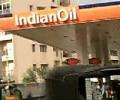
State-owned Indian Oil Corp (IOC) today said it is losing Rs 189 crore per day on selling auto and cooking fuel below cost as global crude oil prices shot up to USD 102 per barrel.

After three consecutive hikes, state-run oil companies on Thursday reduced jet fuel or ATF prices marginally by about one per cent in tandem with international rates for the same.Indian Oil, Bharat Petroleum and Hindustan Petroleum cut aviation turbine fuel (ATF) price by Rs 311 per kilolitre in Delhi to Rs 31,615 per kl with effect from midnight tonight, an IOC official said.

Moody's Investors Service on Wednesday raised the rating outlook for 18 Indian corporates and banks, including Reliance Industries, Infosys, SBI and Axis Bank, to 'stable' from 'negative'. This follows the upgrade by the US-based rating agency in India's sovereign rating outlook to 'stable' from 'negative' on Tuesday. The agency had affirmed the sovereign rating at 'Baa3'.
The government will take home Rs 4,022 crore (Rs 40.22 billion) by way of interim dividend bonanza declared by the state-owned oil companies in the last one week.
The government owned oil companies have proposed to pay interim dividend for the financial year 2006-07

State fuel retailers IOC, Bharat Petroleum and Hindustan Petroleum sell diesel, domestic LPG and kerosene at government dictated rates which are lower than cost of production.
The fuel price revision on Wednesday is likely to wipe out the Rs 1,100 crore net revenue earned by the three oil marketing companies--Indian Oil Corporation, Bharat Petroleum Corporation and Hindustan Petroleum Corporation -- in the last one month, say officials from these companies.
State-run oil refiners are likely to report profits on daily sale of petrol, diesel, cooking gas and kerosene in the fortnight ending December 31, after average crude oil prices have been nearly 3 per cent lower and the rupee has appreciated 3.2 per cent compared with the first fortnight of this month.
Indian Oil Corporation, Bharat Petroleum Corporation Ltd and Hindustan Petroleum Corporation Ltd are projected to lose around Rs 1,15,500 crore (Rs 1,155 billion) during the year as they sold petrol, diesel, kerosene and cooking gas at below production costs when crude oil prices rose steadily between April and July this year to reach a peak of $147 a barrel in early July.

State-owned oil firms on Tuesday cut jet fuel, or ATF, prices by 4 per cent, the first reduction in rates since July, on softening of international oil prices.
The government on Wednesday admitted that it would be difficult to realise the targeted Rs 13,200 crore from divestment due to serious constraints arising as a fallout of Supreme Court's judgement on HPCL and BPCL selloff.
Government has scrapped kerosene imports by private companies and decided that only state-run firms will import the fuel to end its adulteration in diesel.
The Supreme Court on Monday in-principle agreed to reconsider its earlier judgement on Hindustan Petroleum Corporation Ltd and Bharat Petroleum Corporation Ltd divestment, and stayed proceedings before all high courts concerning divestment.
The divestment of HPCL and BPCL may be delayed by at least three years because of "existing hurdles", prime minister's economic advisory council committee member and BJP national executive member Jagdish Shetigar said on Thursday.
Divestment Minister Arun Shourie will meet Law Minister Arun Jaitly in New Delhi on Thursday to consider options before the government and chalk out future strategy.
While BPCL has been ranked third in the poll, Reliance is at the fourth position adn HPCL 8th.
The India story got stronger on the global arena with the country expanding its presence on the elite list of Fortune Global 500 companies, as the PSU banking major State Bank of India has become the sixth domestic firm to feature in the league.
The Supreme Court on Friday reserved its order on petitions challenging the Union government's decision to privatise oil sector PSUs Hindustan Petroleum Corporation Ltd and Bharat Petroleum Corporation Ltd.
Opposition in the Lok Sabha on Thursday took the government to task for its moves to divest its stake in oil majors -- Hindustan Petroleum Corporation and Bharat Petroleum Corporation
Angry Congress, Samajwadi Party and Left party members on Thursday stalled Question Hour in Lok Sabha for about 15 minutes.

State-owned Indian Oil Corp, Bharat Petroleum and Hindustan Petroleum are collectively losing Rs 2.65 billion (Rs 265 crore) per day on selling fuel below cost and may end the fiscal with a Rs 874.4 billion (Rs 87,440 crore) revenue loss.
Workers of state-owned Hindustan Petroleum Corporation Ltd and Bharat Petroleum Corporation Ltd returned to work on Friday after a three-day strike to oppose privatisation of the cash-rich oil refiners.\n\n\n\n
Government has begun drawing contingency plans to avert any shortage of domestic cooking gas as a result of go-slow agitation by employees of the country's largest oil company Indian Oil Corp.
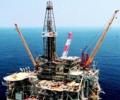
IOC, BPCL and HPCL currently sell petrol at a loss of Rs 6.12 per litre, Rs 4.60 a litre on diesel, Rs 18.42 per litre on PDS kerosene and Rs 265.27 per 14.2-kg LPG cylinder.
The employees unions of Hindustan Petroleum and Bharat Petroleum said on Tuesday that they will strike work for three days starting March 25 in protest against the proposed privatisation of two oil majors.
No divestment of oil PSUs during during the month-long recess of the current Budget session of Parliament beginning March 14, Parliamentary Affairs Minister Sushma Swaraj categorically assured Lok Sabha on Thursday.\n\n
The government on Wednesday ruled out privatisation of Indian Oil, Oil and Natural Gas Corporation and Gas Authority of India Ltd and assured all security concerns would be taken care of while divesting public sector oil
Along with the opposition, key BJP allies Shiv Sena and Samata Party also slammed Divestment Minister Arun Shourie for going ahead with the strategic sale of the equity of the two public sector oil giants.
Along with the opposition, key BJP allies Shiv Sena and Samata Party also slammed Divestment Minister Arun Shourie for going ahead with the strategic sale of the equity of the two public sector oil giants.
With Indian Oil, Hindustan Petroleum and Bharat Petroleum projected to lose Rs 200,000 crore (Rs 2,000 billion) in revenues on sale of petrol, diesel, domestic LPG and kerosene below import cost, industry sources said a hike in the range of Rs 2 to 5 per litre appears on the cards.
Kicking off the divestment process in the two public sector oil companies, Hindustan Petroleum Corporation and Bharat Petroleum Corporation, the government
The Delhi High Court on Thursday dismissed a petition challenging the government's decision to divest equity in the oil public sector units HPCL and BPCL as the findings of the Supreme Court relating to privatisation of Balco came in its way.
SBI Capital Markets Limited, the merchant banking arm of SBI, is eyeing the twin accounts of HPCL and BPCL for managing the divestment programmes of the 2 oil cos.
India's minister for privatisation on Friday said a much-awaited stake sale in state-run refiners Bharat Petroleum Corporation Limited and Hindustan Petroleum Corporation Limited could go ahead as soon as the prime minister gave his approval.
Reliance has shut all of its 1,432 petrol pumps in the country after sales dropped to almost nil as it could not match the subsidised price offered by public sector competition. Public sector currently sells petrol at a loss of Rs 13.97 a litre and diesel at a discount of Rs 20.97 per litre. This revenue loss is made up by the Government through issue of oil bonds. Private firms were not entitled for the subsidy and priced fuel from their pumps at Rs 8-10 a litre higher.
Divesment Minister Arun Shourie said on Tuesday he had apprised Prime Minister Atal Bihari Vajpayee about the Attorney General Soli Sorabjee's opinion on privatisation of HPCL, BPCL.
